
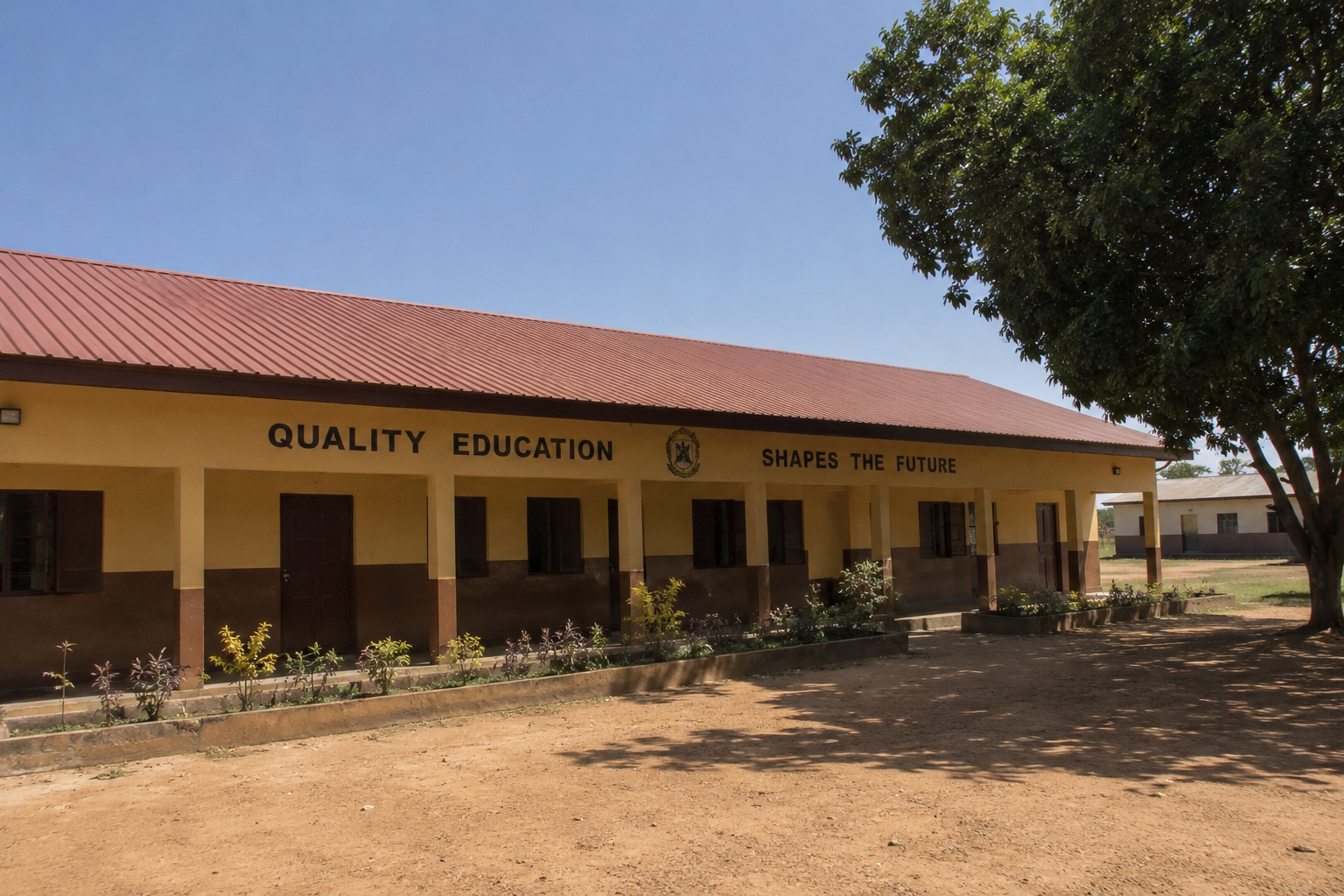
Beyond the Ribbon-Cutting: What $10 Million in African Schools Actually Builds
An inside look at how a $10 million investment in African schools is moving beyond construction to create lasting educational opportunity — and what it will take to make it last.
By Maya Whitfield
Ten million dollars is the kind of number that grabs headlines. It conjures images of gleaming new classrooms, rows of students in crisp uniforms, and a ribbon-cutting ceremony with smiling officials. But the real story of what that money does — and doesn't do — is more complicated, and more interesting, than the photo op suggests.
The Case for Education Spending
Of all the ways foreign aid dollars get spent, education consistently ranks among the most effective. Unlike short-term relief efforts, schools create compounding returns: a single classroom can educate thousands of children over its lifetime, and each of those children carries forward benefits — higher earning potential, better health outcomes, increased civic participation — that ripple through families and communities for generations.
That's the theory, anyway. Whether it plays out that way in practice depends less on the size of the investment and more on how it's executed.
Construction Is the Easy Part
Here's what doesn't make it into the press release: building a school is often the simplest part of the process. The harder, less photogenic work comes after the concrete dries.
A school without teachers is just a building. A school without textbooks, desks, and a curriculum is a building with furniture. And a school without long-term funding for maintenance, salaries, and supplies is a building that may not survive past its first few years.
The most effective education initiatives treat construction as step one of a much longer commitment — one that includes:
Teacher training and retention — recruiting qualified educators and paying them enough to stay Ongoing operational funding — because a school's costs don't end when the building is finished Local ownership — involving the community in planning, not just as the beneficiaries but as decision-makers Monitoring and accountability — tracking whether the investment is actually translating into better educational outcomes, not just more square footage
Why Local Involvement Matters
Development experts have learned, often the hard way, that outside organizations building infrastructure and then leaving tends to produce weaker, less durable results than projects where local communities are involved from the start. When communities have a stake in a school's success — through labor, governance, or shared investment — the school is far more likely to be maintained, staffed, and used effectively for decades rather than years.
This is a lesson $10 million can either honor or ignore. The same check can fund a monument or a movement, depending on how it's spent.
What Success Actually Looks Like
If this investment is going to matter in ten years, not just in this quarter's donor report, the markers of success won't be the number of buildings completed. They'll be things like:
Enrollment and attendance rates over time Teacher retention year over year Literacy and learning outcomes, not just seat time Whether the schools are still standing — and staffed — five, ten, twenty years from now
The Bottom Line
Ten million dollars toward African schools is, on its face, a good and generous thing. Education aid is well-regarded for a reason — it tends to go further than most other forms of assistance, and the intentions behind an investment like this are worth acknowledging.
But good intentions and a big number aren't the same as impact. The real measure of this initiative won't be the ribbon-cutting ceremony. It'll be whether, a decade from now, those classrooms are still full of students learning — not because someone wrote a check, but because someone stayed to make sure it worked.